Training guide
Karate Sparring Rules for Beginners: Scoring, Penalties, and Etiquette
Prepare for beginner karate sparring by separating your school’s contact rules, scoring system, penalties, equipment, commands, and etiquette.
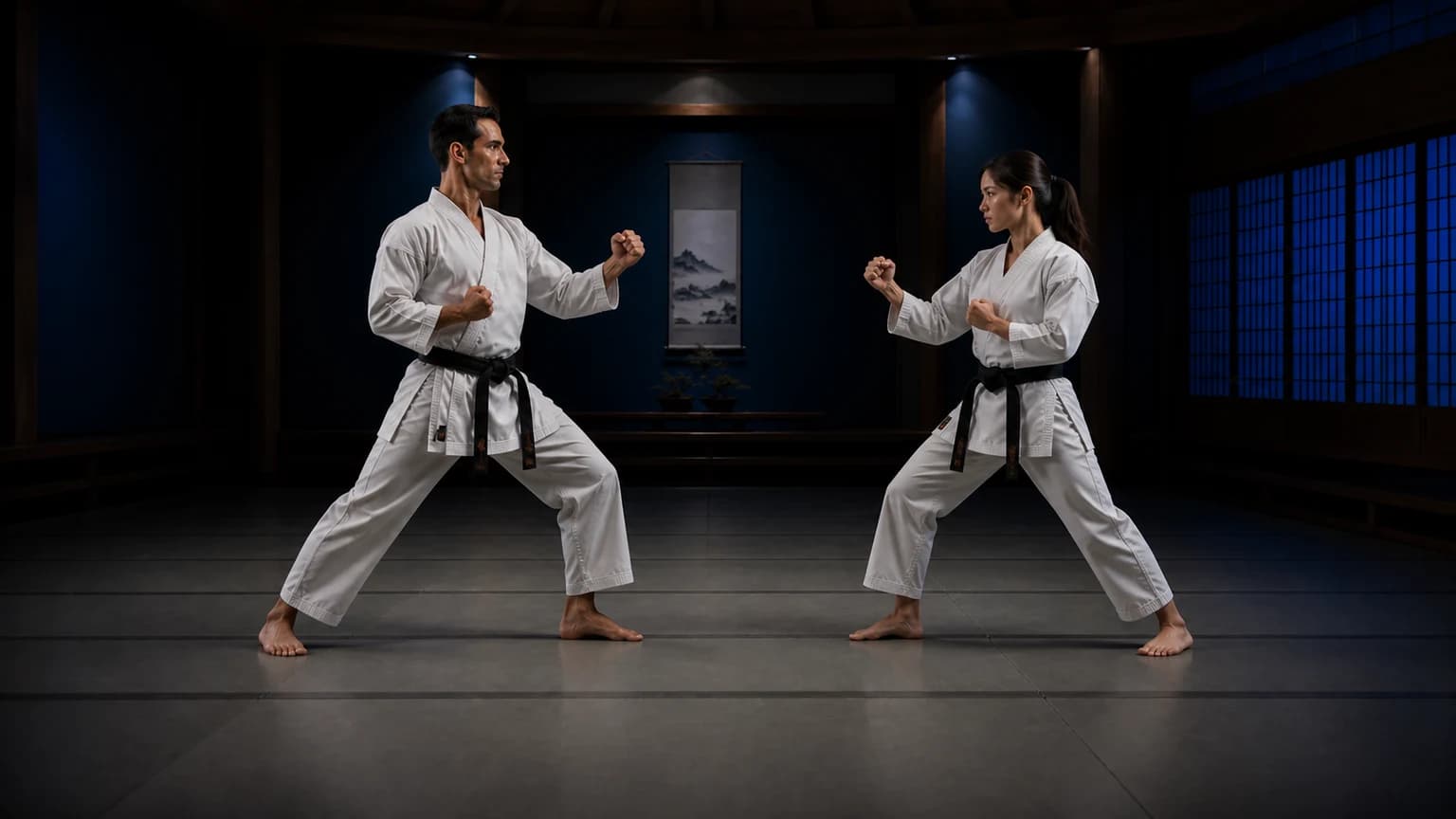
Karate AI: Dojo Coach helps you film, compare, and log beginner sparring practice. To prepare safely, first identify the ruleset your dojo or event uses. Then learn its permitted targets, contact standard, scoring signals, penalties, protective equipment, referee commands, and stopping procedure. WKF rules provide a competition reference, but your class, federation, age group, promotion, or event may apply different requirements.
What beginner sparring rules actually control
Karate sparring, or kumite, does not reward uncontrolled force. Under current World Karate Federation competition rules, a scoring technique needs more than contact with a target. Referees consider factors such as good form, sporting attitude, vigorous application, awareness, correct timing, and correct distance. The exact scoring categories and penalties depend on the applicable WKF rules document and competition division, so check the current document before relying on a point value or penalty name. See the WKF rules and statutes library and the WKF official site.
Your dojo may teach touch contact, controlled contact, restricted targets, or a non-competitive drill. Protective equipment does not automatically permit harder contact. Ask your instructor what contact level applies before you spar.
Decision table for your first session
| Question | If the answer is clear | If the answer is unclear |
|---|---|---|
| Which ruleset applies? | Write the federation, event, division, and document date | Ask the coach or organizer before sparring |
| Which targets are legal? | Mark permitted body areas and techniques | Do not test the boundary on a partner |
| How much contact is allowed? | Agree on the class standard before the round | Use non-contact drilling until a coach clarifies it |
| What ends the exchange? | Stop immediately on the referee or coach command | Rehearse the command at low speed |
| What earns a score? | Look for controlled, well-timed technique at correct distance | Do not chase points from a single disputed exchange |
| What equipment is required? | Check the event or dojo list before training | Do not assume personal equipment meets competition rules |
A safe beginner sparring sequence
- Confirm the setting. Record the dojo, event, age group, ruleset, permitted contact, legal targets, and required equipment.
- Rehearse commands. Practice starting, stopping, resetting, and acknowledging the referee without throwing another technique after “Yame” or the equivalent local command.
- Warm up without contact. Use footwork, guard recovery, distance control, and light partner movement before adding attacks.
- Choose one narrow objective. For example, enter safely and recover your stance, or score a controlled attack without falling forward.
- Run short rounds. Keep intensity low enough to maintain control and follow every stop signal.
- Review one observation. Note timing, distance, balance, awareness, or control. Change one cue before the next round.
Ask a qualified coach to supervise any first contact session, competition preparation, or drill involving a meaningful risk of impact. Stop for pain, dizziness, numbness, confusion, breathing trouble, or unsafe pressure. Seek appropriate medical guidance for symptoms rather than using video to interpret them.
Common beginner mistakes
Assuming every dojo follows WKF rules
WKF rules govern WKF competition contexts. A recreational class, youth session, national federation, or private tournament can modify contact, equipment, targets, scoring, or penalties. Confirm the local document instead of importing a competition rule into a different setting.
Continuing after the stop command
A late attack can create unnecessary contact and may trigger a warning or penalty under the applicable rules. Build the habit during slow drills: hear the command, stop your movement, regain posture, and wait for the restart.
Treating every clean touch as a score
A touch alone may not satisfy the criteria for a valid score. Timing, distance, control, technique quality, and referee recognition matter. Review the exchange with the official or coach instead of arguing from impact alone.
Sparring harder because you wear protective equipment
Equipment reduces some risk, but it does not replace control or authorize prohibited contact. Match the agreed intensity, protect your partner, and stop when the coach changes the drill.
Copying a professional match into beginner practice
Elite athletes operate within specific divisions, preparation levels, officiating standards, and event rules. Start with stable footwork, controlled entries, clear exits, and reliable stop responses before adding speed or complexity.
What video can and cannot decide
Video can help you inspect visible distance, timing, stance recovery, balance, guard position, and whether you obey a stop command. It cannot determine injury severity, prove intent, replace a referee’s decision, or establish that a contact level is safe for you or your partner.
Use the Karate belt test checklist builder to organize your ruleset, equipment, command, and technique checkpoints. It can structure your preparation and highlight missing information. It cannot decide whether a technique is legal under an unverified event rule, certify belt eligibility, diagnose pain, or approve contact.
Use Karate AI: Dojo Coach for one next action
After your coach confirms the session boundaries, open Karate AI: Dojo Coach and film one low-intensity, representative exchange from a stable angle that keeps both feet and partners visible. Review the earliest checkpoint you miss, record one observation, and test one coaching cue in the next comparable round.
Frequently asked questions
Do beginners need to memorize every WKF penalty?
No. Learn your class commands, prohibited actions, contact limit, and reset procedure first. For an event, study the current rules for your division with your coach.
Can I train sparring alone?
You can rehearse footwork, guard recovery, shadow attacks, and stop-command responses alone. Do not simulate partner contact or risky submissions without qualified in-person supervision.
Should I change several techniques at once?
No. Change one variable, such as distance or stance recovery, then repeat the same drill. You will understand the result more clearly.
What if the rules conflict with my dojo’s instructions?
Ask the instructor or event organizer which rules govern that session. Do not guess when contact, eligibility, equipment, or penalties remain unclear.