kata
Kyokushin Karate: What You Learn, How You Train, and Which Rules Apply
Understand Kyokushin basics, kata and partner practice, distinguish dojo rules from competition rules and prepare questions for your first class.
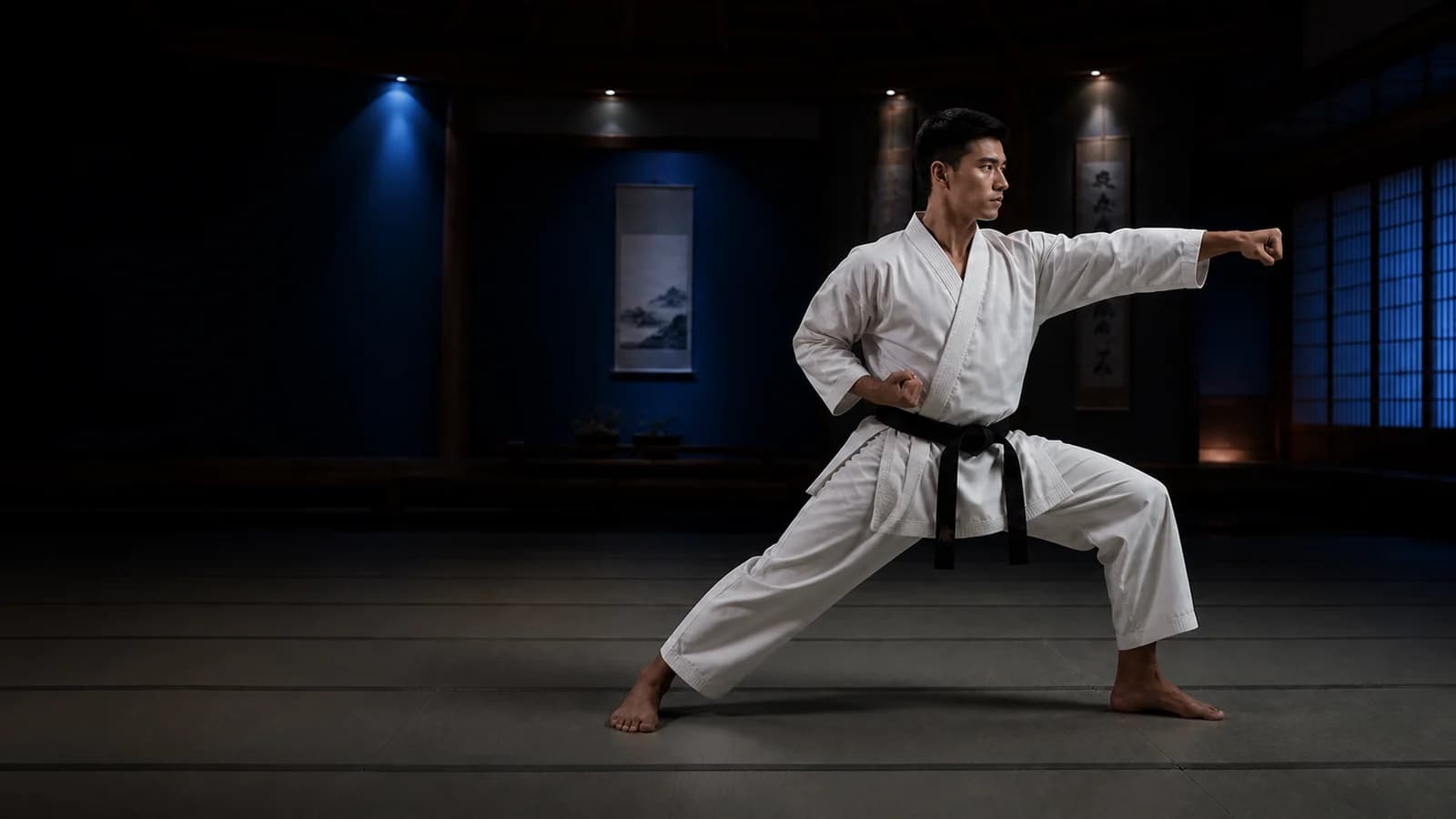
Kyokushin karate includes basic technique, formal sequences and partner practice. It is widely associated with full-contact competition, but a tournament highlight does not show everything you will learn in a beginner class or tell you which contact rules your dojo uses.
Before joining, ask what beginners practise, how instructors introduce partner work and which organization's rules the dojo follows. You do not need to prove that you can tolerate hard contact before you can learn.
The International Karate Organization Kyokushinkaikan overview identifies Masutatsu Oyama as its founder. It describes that organization, not a universal rulebook for every school using the Kyokushin name.
What You Learn Beyond Sparring
| Term | What it generally refers to | A useful beginner question |
|---|---|---|
| Kihon | Basic techniques and positions | Which details should I focus on first? |
| Kata | A set sequence of techniques | Which version does this dojo teach? |
| Kumite | Partner fighting practice or sparring, depending on context | What contact and targets apply to this exercise? |
| Conditioning | Physical preparation selected by the instructor | How do you adapt it to a new student's experience? |
For a concrete example of a school curriculum, London Dojo's published syllabus lists kihon, kata and different forms of kumite among its components. Its grading requirements belong to that school. They are not a universal prescription or a checklist to copy into home training.
You may practise a technique on its own, connect it to a sequence, or work with a partner under a specific instruction. Ask which task you are doing. A technique that appears in a kata does not automatically authorize the same contact during a beginner partner drill.
Separate Three Different Questions About Rules
First, ask what the instructor wants in today's exercise. Second, ask what the dojo permits in its ordinary sparring. Third, if you plan to compete, ask for the current tournament rules for your exact category.
Those answers can differ. Age group, experience, event format, protective equipment and organization matter. Adult competition footage is not a suitable rule reference for a child or a beginner class.
Do not reduce the entire style to a sentence such as “no punches to the head, but head kicks are allowed.” That shorthand leaves out who is competing, which version applies and whether the class has stricter limits. Confirm permitted targets and techniques directly with the instructor before any partner work.
What to Ask Before Your First Class
Ask whether you can observe a beginner session and speak with the instructor. Describe your experience honestly, including that you are new if that is the case. Raise any relevant access needs or health concerns without feeling obliged to disclose them to the whole group.
Useful questions include:
- How do you introduce beginners to partner work?
- Can I decline contact or stop an exercise immediately?
- How do you match partners and supervise them?
- What clothing or equipment do I need for this class?
- Which syllabus and organization do you follow?
You are looking for clear answers, not a promise that nobody can ever be injured. If an instructor dismisses questions or treats pain as proof of commitment, consider another setting. Respect for the instructor does not require you to ignore your own limits.
Understand the Learning Task in Class
When practising basics, ask for one concrete detail rather than trying to imitate every visible feature at once. You might ask about the direction of a step or the ending position of a technique.
When learning kata, confirm the name and version. Write down a short section to review after the lesson. Do not combine movements from unrelated online demonstrations because they share a similar title.
During partner work, agree on the drill, targets, pace and stopping signal before you begin. If you do not understand the instruction, pause and ask. You do not need to continue until the end of a round to justify stopping.
Conditioning also needs appropriate supervision. Do not copy body-impact exercises, hard contact or extreme stretching from a video as preparation for your first class. The fact that an experienced practitioner performs something does not make it suitable for you.
Fictional Example: Choosing a Beginner Class
In this fictional example, Jordan watches a Kyokushin tournament clip and assumes every class will involve the same contact. Before attending a local dojo, Jordan asks what a newcomer actually does.
The instructor explains the introductory class structure and how students can opt out of partner contact. Jordan asks to observe first and notes which questions remain unanswered. Jordan does not use a promotional video to decide that a specific drill is safe.
The example illustrates how to gather information about a real class. It does not certify the instructor, recommend a particular dojo or promise a training outcome.
Keep a Useful Lesson Record
After class, record the exact technique or kata section you worked on, the instruction you received and one question for next time. Write “not yet taught” when a movement is unfamiliar rather than filling the gap from memory.
If the dojo permits filming, use Karate AI: Dojo Coach to review recorded karate technique and keep your practice organized. Record a short instructor-approved section, review the visible movement and note one question to bring back to class. Keep other students out of the recording unless they have agreed.
The app can support a discussion about visible technique. It cannot determine whether contact is appropriate, diagnose pain, certify grading readiness or replace the instructor's supervision.
Avoid These Common Beginner Assumptions
“Harder Contact Means Better Training”
Contact level alone does not tell you what someone is learning. A controlled exercise may focus on timing, positioning or a specific response. Ask what the drill is intended to teach before judging it by intensity.
“Every Kyokushin Dojo Uses the Same Grading”
Schools and organizations can differ in curriculum and assessment. Use the syllabus your instructor has identified. Do not treat another school's published requirements as permission to attempt unfamiliar techniques or conditioning.
“I Must Train Through Pain to Fit In”
Stop an exercise that causes pain and tell the instructor. Seek an appropriately qualified healthcare professional when needed. Do not diagnose the cause from a video or assume that continuing will condition the problem away.
“I Can Learn Contact Training Alone”
You can review terminology and material already taught, but you cannot reproduce supervised partner practice by striking an unprepared friend. Keep contact learning in an appropriate class with clear consent and instruction.
Copyable First-Class Notes
Dojo and organization: Write what the instructor actually confirmed.
Class I observed or attended: Record whether it was a beginner, mixed-level or competition session.
What I practised: Name the basics, kata section or partner exercise.
Contact and stopping rules: Write the instructions for that session, not rules inferred from a video.
One correction I received: Use the instructor's meaning without inventing an anatomical explanation.
One question for next time: Make it specific enough to answer during a lesson.
Your Next Step
Contact a dojo that teaches beginners and ask how the first class works. Confirm the contact policy and what you need to bring. Start with the class you can understand and participate in appropriately, not the hardest highlight you can find online.